Commercial Building Roof Inspections and Industrial Facility Roof Inspections
Commercial and industrial buildings depend on reliable roofing systems to protect equipment, inventory, employees, and daily operations. Roof deterioration and concealed moisture can create costly maintenance challenges, particularly across large flat and low-slope roofs. Commercial and industrial roof infrared inspections can help property owners and facility managers identify thermal patterns that may indicate trapped moisture and determine where additional investigation may be needed.
RoofScanIR provides infrared roof moisture survey services for suitable commercial, industrial, and institutional roofing systems. By combining thermal imaging with professional interpretation and appropriate follow-up testing, infrared surveys can support roof condition evaluations, maintenance planning, and informed repair decisions.
Commercial Building Roof Inspections
Commercial buildings often have extensive roof surfaces, rooftop mechanical equipment, drainage systems, penetrations, and multiple roofing details that require ongoing attention. Property managers and building owners need reliable information about roof conditions to prioritize maintenance, investigate recurring leaks, and plan capital expenditures.
A commercial roof inspection may include evaluating visible membrane deterioration, flashing, drainage, seams, penetrations, and other potential sources of water intrusion. However, moisture trapped beneath a roof membrane may not be apparent during a visual inspection alone.
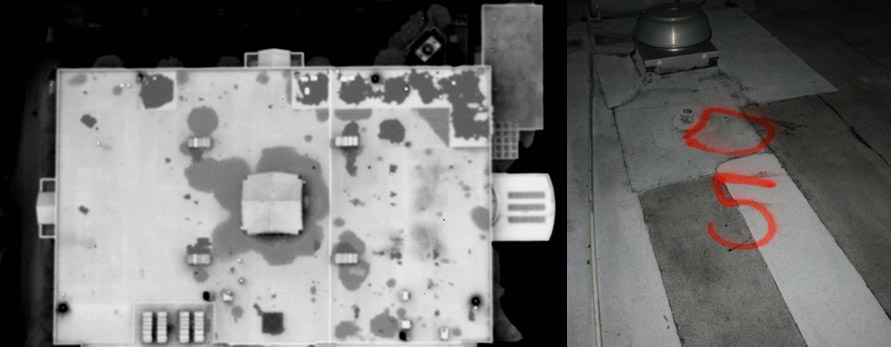
When the roofing assembly and environmental conditions are suitable, infrared thermography can identify temperature patterns that may be consistent with concealed moisture. These anomalies can help guide further inspection and testing before property owners commit to a repair strategy.
Learn more about commercial roof infrared inspections and how thermal imaging can support roof evaluation.
Industrial Facility Roof Inspections
Industrial facilities may have large roof areas, complex building layouts, rooftop ventilation systems, process equipment, and operational requirements that make roof maintenance particularly important. A roofing problem can expose equipment and stored materials to water intrusion or disrupt facility operations if it is not addressed appropriately.
Industrial roof inspections help facility managers document roof conditions, investigate suspected deficiencies, and determine where maintenance or additional evaluation is warranted. Depending on the roofing system, an infrared survey may provide additional information about thermal anomalies that could indicate possible moisture within the roof assembly.
Infrared findings should be evaluated alongside the roof's construction, visible condition, repair history, and any available moisture testing. Thermal patterns alone cannot confirm that an area contains water or identify the exact source of a leak.
For more information, visit our page on industrial roof infrared inspections.
How Infrared Imaging Supports Roof Inspections
Infrared cameras measure surface temperatures and display thermal differences across a roof. Under suitable conditions, roofing areas containing trapped moisture may retain or release heat differently from surrounding dry areas, creating patterns that a trained thermographer can evaluate.
The reliability of a survey depends on several factors, including roof materials, assembly design, recent weather, solar exposure, wind, shading, and the timing of the inspection. Rooftop equipment and construction variations can also produce temperature differences unrelated to moisture.
For that reason, infrared thermography is a diagnostic tool rather than a standalone confirmation method. Suspected moisture areas may require additional testing or physical inspection before repair decisions are made.
RoofScanIR offers infrared roof inspection services for suitable roofing systems, helping building owners and roofing professionals investigate potential concealed moisture.
Flat and Low-Slope Roof Inspections
Flat and low-slope roofs are common on commercial buildings, warehouses, manufacturing facilities, and institutional properties. These roofing systems can cover large areas and include numerous seams, drains, penetrations, and flashing details that must be maintained over time.
When conditions permit, infrared roof surveys can help identify thermal anomalies across suitable roof surfaces. This information may help inspection teams select areas for follow-up moisture verification and investigate potential problems before developing a maintenance or repair plan.
Explore our dedicated services for flat roof infrared inspections and low-slope roof infrared inspections.
Support Preventative Maintenance and Repair Planning
Routine roof inspections and preventative maintenance can help property owners identify developing problems, document repairs, and plan roofing expenditures. For large commercial and industrial properties, a consistent inspection process can also help facility managers compare findings over time and prioritize areas that require attention.
Infrared survey results may contribute to this process by identifying thermal patterns that warrant additional investigation. Depending on the findings, follow-up actions could include targeted moisture testing, localized repairs, continued monitoring, or a more comprehensive roof condition assessment.
Infrared inspections do not determine by themselves whether a roof should be repaired or replaced. Decisions should consider the roof's age, overall condition, confirmed moisture damage, maintenance history, and expected service life.
Learn how commercial roof maintenance and infrared inspection before roof replacement can support more informed roofing decisions.
Aerial Infrared Surveys for Large Roof Areas
Some commercial and industrial facilities have extensive roof areas that may benefit from aerial infrared surveying when the roof assembly and environmental conditions are suitable. Aerial surveys can collect thermal imagery across large sections of a roof, helping identify patterns that may warrant closer examination.
Aerial infrared imaging does not eliminate the need for professional interpretation or verification of suspected moisture. Survey methods should be selected according to the building, roof type, access requirements, and objectives of the inspection.
Learn more about aerial roof thermography and its potential role in evaluating suitable commercial and industrial roofs.
Commercial and Industrial Roof Inspection Services from RoofScanIR
RoofScanIR supports commercial property owners, industrial facility managers, roofing contractors, and other building professionals through a network of certified thermographers. Infrared roof moisture surveys can provide useful diagnostic information when the roofing system and survey conditions are appropriate.
By combining infrared imaging with visual inspection and additional testing when necessary, building teams can better evaluate potential moisture concerns and determine appropriate next steps. View our sample roof inspection projects to learn more about how infrared survey findings can support roof assessment and maintenance planning.
Who We Are
RoofScanIR™ is a National Network of Certified Thermographers having been trained in the application of infrared thermography of flat roofs. All the network members are experienced building technicians and Certified Infrared Thermographers. The thermographers all own their own companies and are members in good-standing in the RoofScanIR™ Network. Call our office today or request a survey via our website to locate a certified technician in your area.
Contact Us
Corporate Office
8472 Adams Farm Road
Randleman, NC 27317
Telephone: 888-722-6447
FAX: 888-722-6447
E-mail: info@unitedinfrared.com
Accounting Office
P.O. Box 1403
Bonsall, CA 92003
Telephone: 888-722-6447
FAX: 888-722-6447
E-mail: accounting@unitedinfrared.com